

Education • Innovation • Entrepreneurship • Colleges & Universities
Introduction
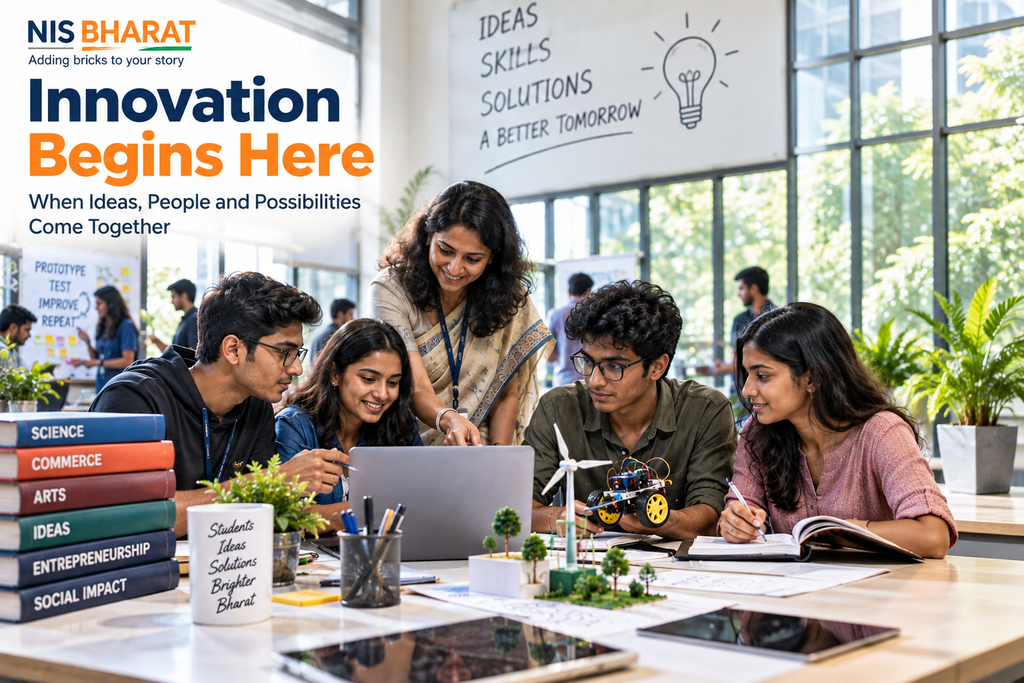
Innovation is no longer limited to engineering laboratories, technology companies or research institutions. Students from arts, commerce and science backgrounds also have valuable ideas that can address real problems in society, business and communities.
A recent report published by The Times of India highlighted Maharashtra’s plan to introduce Innovation Council Labs in aided arts, commerce and science colleges. The initiative is intended to create more opportunities for students to research problems, develop ideas and build practical solutions.
User Elements
This development raises an important question:
How can colleges become places where students do not just learn about problems, but also work on solving them?
Moving Beyond Classroom Learning
Traditional classroom education provides students with knowledge and theoretical understanding. Innovation labs can add another important dimension—learning through experimentation and real-world problem-solving.
In an innovation-focused environment, students can:
- Identify problems faced by their communities.
- Research possible causes and solutions.
- Work in interdisciplinary teams.
- Develop prototypes, models or campaigns.
- Receive guidance from faculty and industry mentors.
- Test ideas and improve them through feedback.
This approach helps students connect academic knowledge with practical application.
Innovation Is Not Only for Engineering Students
Some of the most important social and economic challenges are not purely technical.
Arts and Humanities Students
Students of psychology, sociology and other humanities disciplines can work on issues such as:
- Digital wellbeing and excessive mobile usage.
- Awareness campaigns for public health.
- Community development.
- Behavioural change.
- Social inclusion and education.
Commerce Students
Commerce students can develop practical solutions for:
- Digital payments for small vendors.
- Basic budgeting and financial planning.
- Inventory management.
- Small-business record keeping.
- Market research and customer understanding.
Science Students
Science students can explore:
- Low-cost water-testing methods.
- Environmental monitoring.
- Waste management.
- Local pollution challenges.
- Simple scientific tools for communities.
These examples show that innovation can emerge from every academic stream when students are given the right platform and guidance.
The Importance of Interdisciplinary Collaboration
Many real-world problems require more than one type of knowledge.
For example, a project supporting street vendors may require:
- Commerce students for budgeting and accounting.
- Technology students for digital tools.
- Psychology students for user behaviour.
- Design students for communication materials.
- Social science students for community research.
When students from different disciplines work together, they can understand problems from multiple perspectives and develop more practical solutions.
The Role of Faculty and Industry Mentors
An innovation lab should not be limited to equipment or a physical room. Its real value comes from the ecosystem around it.
Students need access to:
- Faculty mentors.
- Entrepreneurs.
- Industry professionals.
- Researchers.
- Startup founders.
- Community organisations.
- Testing and feedback opportunities.
Mentorship can help students move from an initial idea to research, prototyping, testing and improvement.
Industry participation can also help students understand whether a solution is useful, affordable and relevant outside the campus.
From Ideas to Opportunities
Innovation activities can create a pathway for students who want to explore entrepreneurship.
A student project may eventually become:
- A startup idea.
- A social enterprise.
- A research project.
- A community initiative.
- An industry collaboration.
- A student-led campaign.
- A practical portfolio for future opportunities.
However, not every idea needs to become a business. Some ideas may create social value, improve public awareness or solve a local problem.
The important first step is to give students the opportunity to explore, test and learn.
What This Means for Colleges
Colleges can strengthen their innovation culture by creating structured activities such as:
- Problem-identification workshops.
- Campus innovation challenges.
- Faculty-led research groups.
- Industry interaction sessions.
- Entrepreneurship clubs.
- Prototype development programs.
- Student exhibitions and demo days.
- Mentorship and feedback sessions.
- Inter-college innovation competitions.
- Collaboration with startups and MSMEs.
Such activities can help colleges become more connected to their communities, industries and wider innovation ecosystems.
How NIS Bharat Can Contribute
NIS Bharat believes that meaningful opportunities are created when students, institutions, entrepreneurs, startups, MSMEs and industry connect with one another.
In the area of college innovation, NIS Bharat can support ecosystem-led engagement through:
- Campus entrepreneurship programs.
- Innovation and idea challenges.
- Industry-academia interactions.
- Mentorship and knowledge-sharing sessions.
- Startup and MSME exposure.
- Student opportunity discovery.
- Institutional partnerships.
- Events focused on practical learning and collaboration.
The aim is to encourage students to move from learning to exploring, exploring to creating, and creating to contributing.
Conclusion
Innovation labs can help make higher education more practical, collaborative and connected to society.
When students from arts, commerce and science backgrounds receive access to research opportunities, mentorship and experimentation, they can contribute ideas that address social, economic, environmental and business challenges.
The future of education will not be defined only by examinations and certificates. It will also be shaped by curiosity, collaboration, creativity and the ability to solve meaningful problems.
Every student has the potential to contribute an idea. Every college can become a platform for innovation.
Original Source
This article is based on a report published by The Times of India:
“Innovation labs to bring research culture to arts, commerce & science colleges across Maharashtra” — February 23, 2026.
Read the original report here: Read the original Times of India article